Why Smart Investors Choose These 5 Top Money Market Funds in 2025

With money market funds delivering over 4.5% yields in 2025, selecting the wrong broker platform could easily cost you hundreds of dollars in unnecessary fees each year. Whether you’re parking extra cash or waiting for the perfect investment opportunity, money market funds offer the ideal blend of safety and liquidity, though not all brokers are created equal. While I’ve previously covered what Wall Street won’t tell you about money market funds, today’s focus is on finding the right broker platform to maximize your returns without getting eaten alive by fees.
I’ve spent countless hours analyzing broker platforms, fee structures, and fund offerings to bring you this comprehensive guide. You’ll discover which brokers offer the highest-yielding money market funds, lowest fees, and best overall experience for your cash management needs.
The 5 Best Money Market Funds: My Real-World Rankings
Alright, here’s where I’m going to get into the meat of this. I’ve been watching these money market funds for years now, helping clients figure out where to park their money, dealing with the frustrations when yields drop overnight, and celebrating when someone actually eliminates those ridiculous expense ratios.
The Fed’s been playing games with rates, but right now we’re sitting pretty with yields above 4%. Problem is, not all money market funds are created equal, and some of these big names are quietly eating your returns with fees while others are actually being generous.
But here’s what I’ve learned recently – the mobile experience matters way more than I used to think. I’ve got clients checking their accounts daily on their phones, and when the app sucks, it becomes a real problem. So I’m factoring that in now.
1. Fidelity – The Complete Package

Fidelity’s Government Cash Reserves (FDRXX) has become my go-to recommendation for most clients, and after looking at their mobile app situation, I’m even more convinced.
The Numbers That Actually Matter:
- 4.43% seven-day SEC yield (second highest)
- $0 minimum investment – literally anyone can start
- Government fund – they stick to Treasury securities and government-backed stuff
- 0.38% expense ratio (reasonable, not great)
The Mobile Experience That Seals It: The Fidelity Investments app consistently gets strong ratings across platforms. Recent reviews from industry experts praise its overall functionality, though some users note that recent updates made navigation slightly more difficult.
My clients consistently tell me the Fidelity app is just… easy. You can check balances, move money around, and everything works without making you want to throw your phone across the room.
The Reality Check: Recent updates made navigation a bit more difficult according to some reviews, but honestly, I haven’t heard major complaints from clients. And that 0.38% expense ratio isn’t terrible, but it’s not Vanguard-level good either.
Who This Works For: Pretty much everyone. If you’re starting with $500 or $50,000, this just works. The combination of competitive yield, zero barriers, and a mobile app that actually works well makes this my default recommendation.
2. JPMorgan – The Yield Champ (With Chase Integration Magic)

JPMorgan’s Prime Money Market Fund (VMVXX) surprised the hell out of me this year with that 4.51% yield. But what really caught my attention is how seamlessly it works if you’re already a Chase customer.
The Impressive Stats:
- 4.51% seven-day SEC yield (highest in this bunch)
- Prime fund – they invest in corporate paper, not just government stuff
- $1,000 minimum to get started
The Chase Integration That Changes Everything: If you’re already banking with Chase, this is a completely different experience. Your money market fund shows up right in your regular Chase app alongside your checking account. No separate login, no juggling multiple apps.
Chase’s mobile app experience is generally well-regarded for its integration capabilities. It’s simple, works well, and doesn’t try to overwhelm you with features you’ll never use.
Who This Works For: Chase customers who want everything in one place, or people with serious money where that extra yield matters more than the fees.
3. Vanguard – The Efficiency Expert (With a Stubborn Streak)

Vanguard Federal Money Market Fund (VMFXX) is like that friend who’s annoyingly good with money but refuses to upgrade their flip phone because “it works fine.”
The Vanguard Magic:
- 4.67% seven-day SEC yield (actually higher than I initially thought)
- 0.11% expense ratio (this is just ridiculous – in a good way)
- Government fund safety
- $3,000 minimum (the barrier problem)
The Mobile Reality Check: Vanguard’s app gets mixed reviews. It’s designed for buy-and-hold investors, not people who want to check their accounts obsessively.
I tell clients: if you open the app more than once a week, you might get frustrated. It’s utilitarian. It works. It’s not pretty, and it’s not trying to be.
Recent improvements helped with visual design, but it’s still clearly built by people who think fancy UX is a waste of time.
The Long-Term Math: That 0.11% expense ratio means on $50,000, you’re paying $55 per year in fees instead of much more with other funds. Over 10 years, that’s real money.
Who This Works For: People who can swing the $3,000 minimum and don’t need their investment app to be Instagram-smooth. The fee savings compound over time.
4. Charles Schwab – The Love-It-or-Hate-It Option
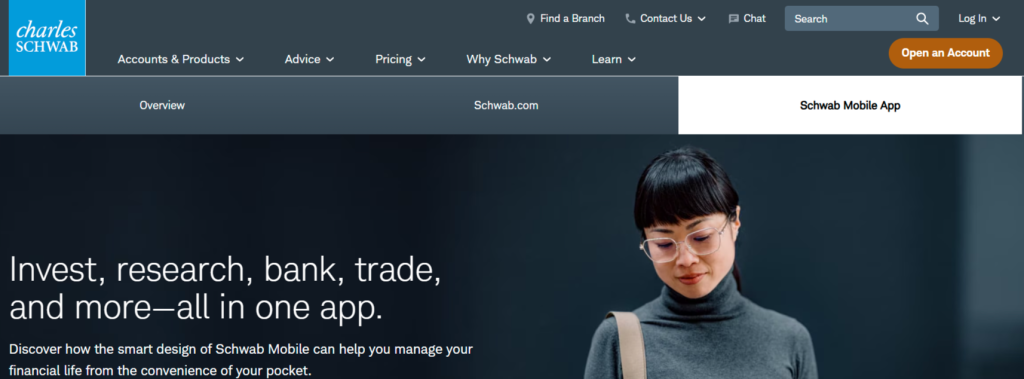
Schwab’s Value Advantage Money Fund (SWVXX) has the most polarized user reviews I’ve ever seen. People either give it 1 star or 5 stars – there’s no middle ground.
What You Get:
- 4.2% seven-day SEC yield (solid performance)
- $0 minimum investment
- 0.34% expense ratio (middle of the pack)
- Prime fund – they can invest beyond just government securities
The Mobile Experience Mess: Reviews are all over the place. Some people love the advanced features; others find the interface clunky compared to more mobile-first brokers. Schwab actually has two different mobile apps – basic Schwab Mobile and the advanced thinkorswim mobile.
A significant portion of Schwab clients use their phones as their primary investing method, but the experience is… inconsistent. Recent redesigns helped with the trade ticket interface, but it’s still not as smooth as Fidelity.
The Reality: If you’re the type who wants tons of advanced features and doesn’t mind a learning curve, you might love Schwab. If you want something that just works simply, you’ll probably hate it.
Who This Works For: People who are already Schwab customers or who want more advanced trading features alongside their money market fund.
5. Morgan Stanley – The Premium Experience

Morgan Stanley’s U.S. Government Money Market Trust (DWGXX) feels like the “luxury” option, complete with a wealth management app that has all the bells and whistles.
The Stats:
- 4.18% seven-day SEC yield (lowest of the bunch)
- 0.36% expense ratio
- $1,000 minimum investment
- Government fund safety
The Premium Mobile Experience: This is clearly designed for wealth management clients. The app includes sophisticated features like biometric security with facial or fingerprint recognition, one-tap money transfers, goal tracking, external account viewing – it’s comprehensive.
Mobile check deposits, bill pay, integration with other services – it’s got everything. But it feels like overkill if all you want is a money market fund.
The Reality: If you’re already working with Morgan Stanley for wealth management, this makes sense. The app is sophisticated, secure, and feature-rich. But if you’re just shopping for a money market fund? The yield is the lowest and there’s not a compelling reason to choose this.
The Mobile Experience Reality Check
Here’s something I didn’t expect to matter as much as it does: how often you’ll actually use the app affects which fund makes sense.
- If you check balances daily: Fidelity wins hands down. The app is smooth, ratings are solid, and you won’t get frustrated.
- If you’re a Chase customer: JPMorgan’s integration is genuinely convenient. Everything in one app matters more than you think.
- If you check maybe once a month: Vanguard’s basic app is fine, and those low fees will save you money long-term.
- If you want advanced features: Schwab has the tools, but be prepared for a learning curve.
- If you’re already wealthy: Morgan Stanley’s app is impressive, but overkill for most people.
The Fee Math That Still Makes Me Mad
Let me show you something about fees using $30,000:
- JPMorgan: 4.51% yield – estimated fees = strong net return
- Vanguard: 4.67% yield – 0.11% fees = 4.56% net = $1,368 per year
- Fidelity: 4.43% yield – 0.38% fees = 4.05% net = $1,215 per year
Vanguard’s higher yield and ultra-low fees actually net you more money than anyone else. And even Fidelity performs well.
Government vs. Prime: The Risk Thing Nobody Talks About
Vanguard, Fidelity, and Morgan Stanley offer government money market funds – Treasury bills and government-backed securities. Safe as cash gets.
JPMorgan and Schwab offer prime funds – they can buy corporate commercial paper and bank CDs. Slightly higher risk for potentially higher returns.
During normal times, the difference is academic. But during financial stress, government funds hold up better. I had clients in prime funds during early COVID chaos, and while nothing catastrophic happened, there were some nervous weeks.
My Honest Recommendation
For most people: Fidelity. The combination of 4.43% yield, zero minimum, government fund safety, and an app that actually works well makes this the sweet spot.
If you can swing the $3,000 minimum: Vanguard. Those ultra-low fees and currently strong yield will save you money long-term, and the basic app is fine if you’re not checking constantly.
**Personally, I use Vanguard because I’ve got the $3,000 to meet their minimum, and those ultra-low fees combined with the higher current yield (4.67%) are just too good to pass up long-term. That 0.11% expense ratio versus everyone else’s 0.34-0.38% adds up to real money over the years. Plus, I don’t check my money balance obsessively, so the basic app works fine for me.
If you’re already a Chase customer: JPMorgan. The yield is highest and the integration is genuinely convenient.
If you want advanced features: Schwab. But be prepared for a polarizing experience.
If you’re wealthy and want full-service: Morgan Stanley. But you’re probably not reading this article if that’s your situation.
The Thing Nobody Tells You
Stop overthinking this. The difference between the top performers is manageable on typical amounts. Pick one with a mobile experience that doesn’t annoy you, reasonable fees, and forget about it.
These 4%+ yields won’t last forever. When the Fed cuts rates, they’ll all drop together. The most important thing is actually having money set aside, not optimizing the last 0.1% of yield on it.
Bottom Line
The money market fund game is all about finding that sweet spot between yield, fees, and convenience. Right now, with rates where they are, you can’t really go wrong with any of these top picks – but Vanguard’s combination of high yield and rock-bottom fees makes it the clear winner for anyone who can meet the minimum. For everyone else, Fidelity delivers the best all-around package without making you jump through hoops.
Remember, these yields are basically free money compared to what banks are offering, so don’t let perfect be the enemy of good. Pick one, park your cash, and sleep well knowing you’re earning what your money deserves in this rate environment.
Disclaimer: The information provided in this article is for educational purposes only and should not be considered personalized financial advice, as investment decisions should always be based on your individual financial situation and risk tolerance. Past performance and current yields mentioned are not guarantees of future results, and you should consult with a qualified financial advisor before making any investment decisions.