Dollar Cost Averaging Bond ETFs: Complete Guide for Beginners
Did you know that Fidelity research shows dollar cost averaging can help you purchase more shares for the same money? In their analysis, investors using this strategy bought 253.4 shares at an average price of $19.73, compared to just 250 shares for those who invested their full amount at once at $20 per share. While everyone talks about dollar cost averaging stocks, there’s a hidden gem in the investment world that many overlook: systematically investing in bond ETFs.
If you’re serious about increasing your wealth passively, this strategy deserves your attention. Bonds are among the safest investment products available, and when you follow Warren Buffett’s philosophy of holding quality investments for the long term, they automatically grow your net assets through consistent income generation and compound returns.
The Compelling Benefits of Dollar Cost Averaging Bond ETFs
When I first started investing in bond ETFs, I made every mistake in the book. I’d watch interest rates like a hawk, trying to time the perfect entry point, and honestly? It was exhausting and completely counterproductive.
That’s when I discovered dollar cost averaging with bond ETFs, and it completely changed my approach to fixed-income investing. Instead of trying to outsmart the market, I started making regular purchases regardless of what rates were doing.
Risk Reduction Through Systematic Investment
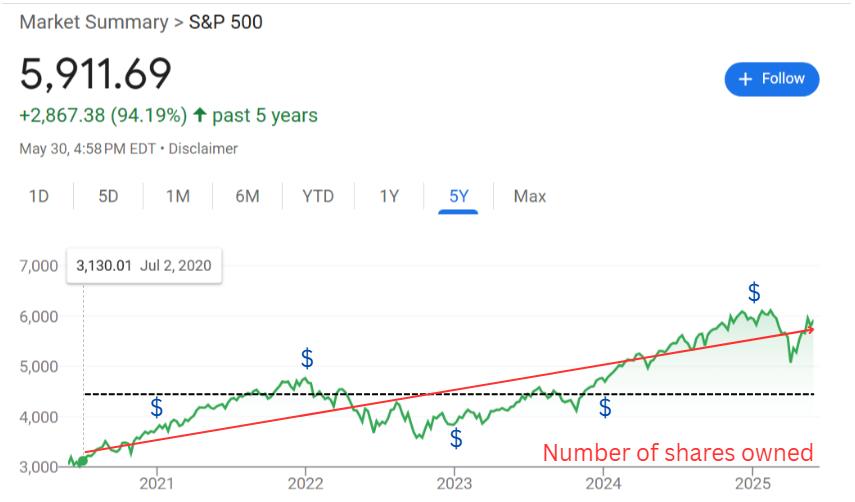
The beauty of dollar cost averaging bond ETFs lies in how it smooths out your purchase prices over time. When bond prices are high (yields low), your fixed monthly investment buys fewer shares. When prices drop (yields rise), you automatically scoop up more shares for the same dollar amount. As Warren Buffett famously said, “Be fearful when others are greedy and greedy when others are fearful” – dollar cost averaging embodies this wisdom by automatically buying more when others are selling in panic.
I remember during the 2022 rate hike cycle, watching my bond ETF prices tumble month after month. Instead of panicking, my systematic approach meant I was actually accumulating more shares at lower prices. By the end of that volatile period, my average cost basis was significantly better than if I’d made one lump sum investment at the beginning.
This price averaging effect becomes particularly powerful with bond ETFs because they tend to be less volatile than individual bonds, but still experience meaningful price fluctuations based on interest rate movements.
Protection Against Market Timing Mistakes
Let’s be brutally honest here – timing interest rate cycles is nearly impossible, even for Wall Street professionals earning millions annually. These are people with teams of analysts, sophisticated models, and insider access to economic data, yet research consistently shows they struggle with market timing just like everyone else.
Recent Morningstar data reveals that roughly two out of every three actively managed bond funds survived and beat their index composite during the year ended June 30, 2024, but this short-term success doesn’t translate to consistent long-term outperformance. Professional bond managers routinely get caught off guard by market movements, like during the 2022 rate hiking cycle when countless institutional investors with access to Federal Reserve communications still pulled billions from bond funds at exactly the wrong time, locking in losses instead of staying disciplined.
Dollar cost averaging completely sidesteps this prediction game. Whether rates are climbing, falling, or stuck in neutral, you’re building your position methodically. This approach shields you from the costly mistake of waiting for some mythical “perfect” entry point that rarely materializes when you expect it. The data is consistent year after year, so a systematic investment strategy removes this impossible burden of prediction and keeps you laser-focused on long-term wealth building rather than getting distracted by daily market noise and the timing games that even highly paid professionals consistently lose.
Building Consistent Income Streams
One of the most compelling aspects of dollar cost averaging bond ETFs is how it builds your income stream over time. Each monthly purchase adds to your distribution-generating assets, creating a snowball effect.
Bond ETFs pay out interest through a monthly dividend, with the value of the coupon varying from month to month Bond ETF Definition, Types, Examples, and How to Invest, which makes them particularly attractive for systematic investing. As you accumulate more shares through regular purchases, these distributions grow proportionally.
Here’s what happens with $500 monthly in a bond ETF yielding 4%:
- Month 1: $1.67 in monthly distributions from your $500 investment
- Year 1: Roughly $20 monthly from your $6,000 total investment
- Year 5: Approximately $110 monthly from your $33,200 total accumulated position ($30,000 invested + $3,200 in compound growth)
Compare this to parking the same money in a traditional savings account at 0.5% APY – after five years, you’d only generate about $14 monthly in interest from your $33,300 total. That’s a difference of nearly $96 per month ($110 vs $14), or over $1,150 annually in lost income potential.
The key is reinvesting these distributions during the accumulation phase, which compounds your returns. Many brokerages offer automatic dividend reinvestment plans (DRIPs) that make this process seamless, allowing you to purchase additional shares with each distribution without any manual intervention or transaction fees.
Psychological Advantages
Perhaps the biggest benefit I’ve experienced is the psychological relief that comes with automation. Once I set up automatic monthly transfers to purchase bond ETFs, I stopped obsessing over daily rate movements and market commentary.
This emotional detachment is incredibly valuable. Behavioral finance research consistently shows that emotional decision-making hurts investment returns. By removing the decision-making process from day-to-day market fluctuations, dollar cost averaging helps you stick to your long-term plan.
I sleep better knowing that regardless of what happens in markets tomorrow, my investment plan continues executing automatically. This peace of mind is worth its weight in gold, especially during volatile periods when financial media becomes increasingly dramatic.
Diversification Benefits of Bond ETF Investing
One of the most powerful advantages of bond ETFs is the instant diversification they provide, which would be nearly impossible for individual investors to achieve on their own. Fixed income mutual funds and ETFs can contain hundreds—sometimes thousands—of bonds in a single fund. You get more diversification than owning just a handful of individual bonds, according to Vanguard.
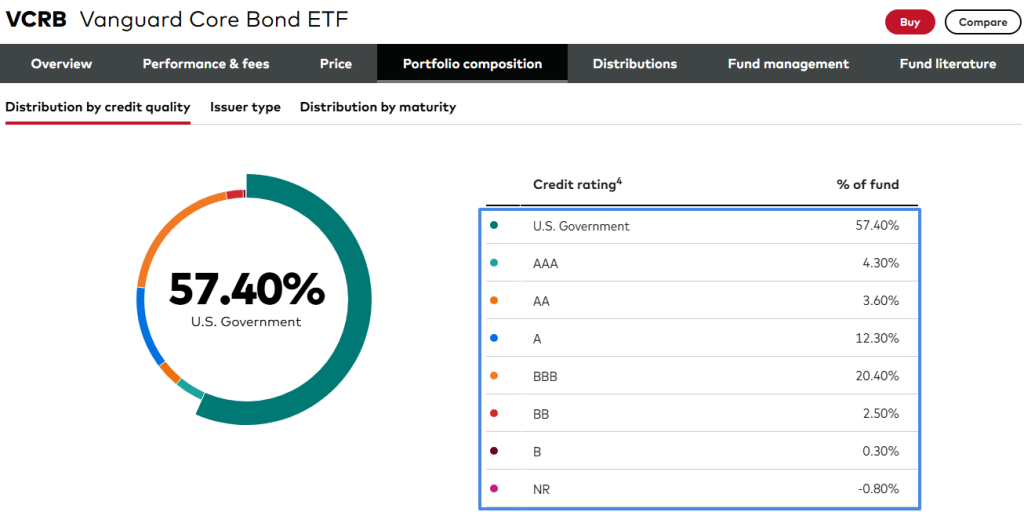
image sourced from Vanguard
Consider what it would take to build a properly diversified bond portfolio manually: The Schwab Center for Financial Research generally recommends holding at least 10 individual issues. For non-government guaranteed bonds like municipal or corporate bonds, we recommend holding at least 10 different issuers as well, to boost the diversification benefit. This would require substantial capital for most investors.
Bond funds offer more diversification because they spread your money across different loans, reducing risk, explains Vanguard. For example, Vanguard Total Bond Market ETF holds more than 10,000 domestic investment-grade bonds while Vanguard’s bond fund lineup covers a wide range of bond types, including government bonds, corporate bonds, municipal bonds and international bonds. With dollar cost averaging, you’re systematically building this diversified exposure over time, reducing concentration risk while smoothing out the impact of any single bond’s poor performance on your overall portfolio.
Understanding Dollar Cost Averaging for Bond ETF Investments
Timing bond investments feels impossible – and that’s because it pretty much is. Interest rates, inflation expectations, and credit spreads create a complex web that even professional investors struggle to navigate. That’s exactly why dollar cost averaging makes so much sense for bond ETF investing.
What Dollar Cost Averaging Actually Means for Bond ETFs
Dollar cost averaging (DCA) is basically investing a fixed amount of money at regular intervals, regardless of what the market’s doing. With bond ETFs like AGG, BND, or TLT, this means buying the same dollar amount every month or quarter, whether bond prices are high or low.
The key difference between DCA for bonds versus stocks is the level of volatility you’re dealing with. While stock prices can swing dramatically – sometimes 20% or more in a single day based on earnings reports or market panic – bond prices move much more gradually. Since bonds are fundamentally safer investments backed by government or corporate debt obligations, their price movements are typically smaller and less erratic than the wild swings you see in the stock market. This gives you peace of mind, because you’re investing in fixed income to make money passively without the stress of constant market watching.
Why Bond Volatility Actually Works in Your Favor
Image sourced from gettyimages
The real power of dollar cost averaging with bond ETFs becomes clear when you think long-term. When bond prices drop during rising rate cycles, your regular investments automatically buy more shares at those lower prices. If you’re planning to hold for years, this sets you up perfectly for when the market eventually recovers.
When prices drop: During a period when interest rates rise and your bond ETF falls from $100 to $85, your monthly $500 investment suddenly buys about 5.88 shares instead of 5 shares. Those extra shares you accumulate at depressed prices become incredibly valuable when bond prices recover – which they historically do as rate cycles turn.
The math breakdown: Let’s say you invest $500 monthly for two years. If prices stayed flat at $100, you’d own 120 shares worth $12,000. But if prices dipped to $85 for half that period, you’d accumulate roughly 129 shares. When prices return to $100, your position is worth $12,900 instead of $12,000 – a $900 bonus simply from buying more when prices were down.
This is why Warren Bufett recommends dollar cost averaging for ordinary investors. The temporary price drops that worry some investors become your opportunity to accumulate more shares at a discount, setting you up for stronger returns when you eventually sell during the recovery.
Common Misconceptions That Trip People Up
The biggest trap investors fall into is trying to time their entry into bond ETFs – waiting for interest rates to peak, inflation to cool, or some other “perfect” market condition. This mindset completely defeats the purpose of dollar cost averaging and costs you real money.
Here’s the brutal truth: you cannot predict where interest rates, bond prices, or any market will go next. Even professional bond traders with access to Federal Reserve communications and economic data get it wrong regularly. If they can’t consistently time the market, what makes you think you can?
Dollar cost averaging works precisely because it eliminates the need to predict anything. Whether you start investing when rates are rising, falling, or sideways doesn’t matter over the long term. Every month you spend waiting for perfect conditions is a month you’re not accumulating shares or earning dividends. The market’s unpredictability isn’t a problem to solve – it’s exactly why dollar cost averaging exists in the first place.
Conclusion
Dollar cost averaging bond ETFs isn’t just a strategy – it’s your pathway to building a robust, income-generating portfolio that weathers market storms while steadily growing your wealth. We’ve covered everything from the fundamental benefits of systematic bond investing to advanced strategies that can supercharge your returns.
The beauty of this approach lies in its simplicity and effectiveness. You don’t need to time the market perfectly or stress about interest rate movements. Instead, you’re building wealth consistently, one contribution at a time, while generating the steady income that bonds are famous for.
Ready to start your dollar cost averaging bond ETF journey? Begin by opening a brokerage account that offers commission-free ETF trades, choose 2-3 diversified bond ETFs from our recommended list, and set up automatic monthly contributions. Remember, the best time to start was yesterday – the second-best time is today!
Your future self will thank you for taking this crucial step toward financial security and consistent income generation.