5 Best Money Market Funds That Made Fidelity Clients Rich
With over $7.01 trillion in money market fund assets under management industry-wide, these investment vehicles have become the go-to choice for savvy investors seeking safety without sacrificing returns. If you’re looking to park your cash while earning competitive yields, Fidelity’s money market funds offer some of the most attractive options in today’s market, especially when you understand what Wall Street won’t tell you about money market funds and how they compare to other top-performing options available in 2025.
In this comprehensive guide, I’ll walk you through Fidelity’s top-performing money market funds, helping you understand their unique features, yields, and how they can fit into your overall investment strategy. Whether you’re a conservative investor seeking capital preservation or someone looking to optimize your emergency fund, we’ve got you covered.
Why Choose Fidelity for Your Money Market Investments?
Look, I’ll be straight with you – I wasn’t always a Fidelity fan. Actually, I made the rookie mistake of parking my emergency fund in a regular savings account for way too long, earning basically nothing while inflation ate away at my purchasing power like a hungry teenager at a buffet.
When I finally got serious about money market investments, I shopped around everywhere. Vanguard, Schwab, TD Ameritrade – you name it, I probably spent hours on their websites comparing rates and fees. But here’s what made me stick with Fidelity after trying a few different platforms.
Their Track Record Speaks Volumes
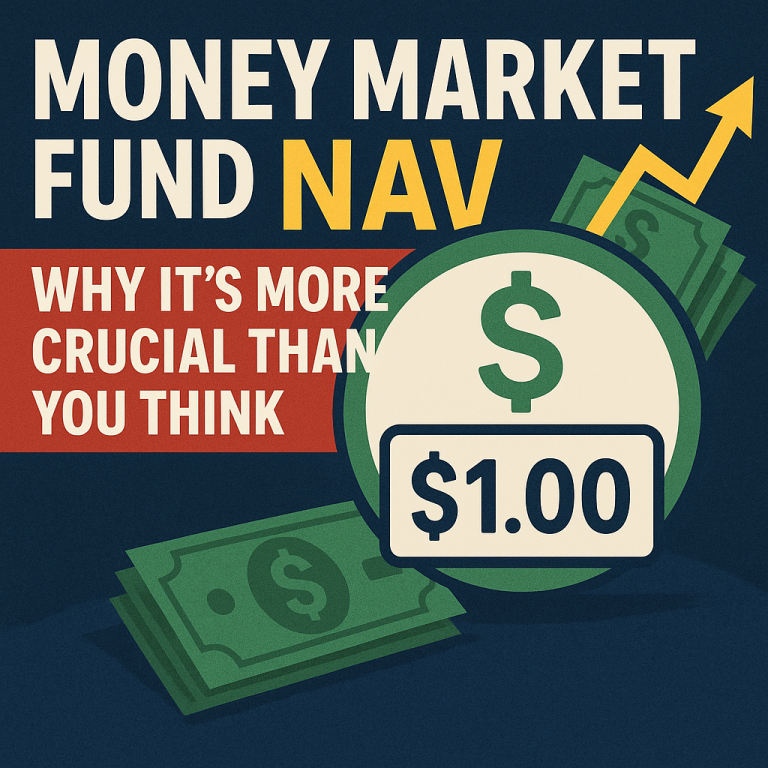
Fidelity’s been managing money since 1946, which means they’ve weathered more market storms than I care to count. Their Government Money Market Fund (SPAXX) has consistently delivered competitive yields while maintaining that crucial $1.00 net asset value that money market investors depend on. During the 2008 financial crisis, when some money market funds were “breaking the buck,” Fidelity’s funds held steady. That kind of stability matters when you’re talking about your emergency savings.
Expense Ratios That Don’t Kill Your Returns
Here’s where I got burned initially – I didn’t pay attention to expense ratios at my first brokerage. Was paying 0.75% annually on what should’ve been a low-cost investment. Ouch. Fidelity’s money market funds typically run expense ratios between 0.39% to 0.42%, which beats the industry average of around 0.55%. That might not sound like much, but on a $50,000 emergency fund, you’re saving about $65 annually compared to higher-cost alternatives.
Options for Every Situation
What really sold me was the variety. Fidelity offers government money market funds, prime money market funds, and municipal money market options depending on your tax situation and risk tolerance. I started with their Government Money Market Fund because I’m pretty conservative with my emergency money, but my higher-earning friends swear by the municipal options for their tax advantages.
Everything Works Together Seamlessly
This is huge – and something I didn’t appreciate until I experienced the alternative. With Fidelity, your money market fund integrates perfectly with your other accounts. Want to buy stocks? The cash sweeps automatically into your money market fund until you’re ready to invest. Need to pay bills? Easy transfers to your checking account. No juggling multiple platforms or waiting days for transfers to clear.
Their mobile app actually works well too, which seems obvious but trust me, not all investment apps are created equal. I can check my balance, transfer money, and even deposit checks without wanting to throw my phone.
Customer Service That Doesn’t Suck
I’ve called Fidelity support probably six times over the years, and honestly, I’ve never wanted to scream at my phone afterward. That’s saying something. Their reps actually know what they’re talking about, and I’ve never been stuck in phone tree hell for more than a few minutes.
The bottom line? Fidelity combines competitive rates with rock-solid reliability and tools that actually make managing your money easier, not harder.
Top Money Market Funds 2025: Our Complete Ranking (Fidelity)
Man, I’ve spent way too much time researching Fidelity’s money market funds over the years. Let me break down what I’ve learned about these options, because honestly, the names alone used to make my head spin when I was first getting started.
1. Fidelity Government Money Market Fund (SPAXX)

- Expense Ratio: 0.42%
- Current Yield: 3.96% (TTM yield as of June 2025)
- NAV: $1.00 (stable NAV maintained)
- Assets: Government securities, Treasury bills, agency securities
Best for: Conservative investors prioritizing safety over returns, or those just starting out.
When I was first looking into SPAXX, that 3.96% yield seemed pretty attractive. The fact that it’s backed by government securities really caught my attention – there’s something reassuring about knowing your money is tied to Uncle Sam’s credit rating. But here’s what I discovered during my research – that 0.42% expense ratio can really add up.
Think about it this way: if you’re planning to park $50,000 in there, you’re basically paying $210 a year just in fees. The daily liquidity is definitely a plus though, and having no minimum investment makes it accessible for anyone just starting out. Perfect for testing the waters without a huge commitment.

2. Fidelity Money Market Fund (SPRXX)

- Expense Ratio: 0.42%
- Current Yield: 4.01% (seven-day SEC yield)
- NAV: $1.00 (stable NAV maintained)
- Assets: Commercial paper, certificates of deposit, short-term corporate debt, repurchase agreements
Best for: Investors willing to accept minimal additional risk for slightly higher returns.
SPRXX initially grabbed my attention because of that slightly higher 4.01% yield. The fund gets to diversify into commercial paper and CDs, which theoretically should mean better returns. I spent hours comparing this to SPAXX, thinking I was being smart about maximizing yield.
But here’s the reality check I had to face: that same 0.42% expense ratio is still there, eating into those returns. For smaller amounts, the difference between 3.96% and 4.01% isn’t life-changing money. The broader range of investments does give it more flexibility though – corporate debt and repurchase agreements can potentially boost returns when market conditions align right.

3. Fidelity Treasury Money Market Fund (FZFXX)

- Expense Ratio: 0.42% (estimated)
- Current Yield: 4.02% (as of January 31, 2025)
- NAV: $1.00 (stable NAV maintained)
- Assets: U.S. Treasury securities exclusively – Treasury bills, notes, and other direct government obligations
FZFXX caught my eye during my research phase when I was being extra cautious about safety. The 4.02% yield isn’t the highest, but knowing it invests exclusively in Treasury securities felt right for someone prioritizing capital preservation over maximum returns.
What really opened my eyes was learning about the potential state tax advantages. Depending on where you live, this could actually net you more than the higher-yielding options after taxes. I didn’t fully grasp this concept until I started diving deep into tax implications. Here’s the thing though – when I really looked at the numbers, FZFXX and SPAXX are almost identical. SPAXX at 3.96% versus FZFXX at 4.02% is a whopping 0.06% difference. We’re talking about $6 extra per year on every $10,000 invested.
The real difference? SPAXX mixes in some agency securities alongside Treasuries, while FZFXX is pure Treasury. For practical purposes, both are government-backed and equally safe. The only reason to choose FZFXX over SPAXX is if you’re in a high-tax state and want that potential state tax exemption on Treasury income. Otherwise, you’re splitting hairs over a yield difference that amounts to pocket change. When you’re dealing with pure Treasury investments, you’re essentially lending money directly to the federal government – but so is most of what SPAXX does anyway.

4. Fidelity Government Cash Reserves (FDRXX)

- Expense Ratio: ~0.30–0.35%
- Current Yield: 5.01% (as of October 2023)
- NAV: $1.00 (stable NAV maintained)
- Assets: Government securities, Treasury bills, agency debt, government-backed repurchase agreements
Best for: Cost-conscious investors, but major caveat: limited availability across account types.
This is where my research got really interesting. FDRXX looks like it could be a solid option – that 4.02% yield combined with a lower expense ratio around 0.30-0.35% is definitely more competitive than some of the other Fidelity options. Problem is, from what I’ve learned, it’s not always available as a core position in every account type.
I’ve read plenty of forum posts from people who spent weeks trying to figure out why they couldn’t access it in certain accounts. Apparently availability varies by account type and sometimes even by region. Seems frustrating as hell, but the upside is that when you can get it, you’re getting a decent yield with lower fees eating into your returns. The mix of government securities gives you that safety net while the reduced expense ratio lets you keep more of what you earn.
The downside is the inconsistent availability and the fact that even when you can access it, there’s no guarantee it’ll stay available in your specific account type. Plus, that 4.02% yield, while respectable, isn’t earth-shattering compared to what you might find elsewhere if you’re willing to shop around different fund companies.

5. Fidelity Money Market Fund Premium Class (FZDXX)

- Expense Ratio: ~0.35–0.40% (estimated)
- Current Yield: ~4.0–4.2%
- NAV: $1.00 (stable NAV maintained)
- Assets: High-quality short-term debt instruments, commercial paper, certificates of deposit, government securities
The premium class – FZDXX – is where things get serious if you’ve got substantial cash to park – and I mean substantial. We’re talking a hard $100,000 minimum for taxable accounts, no exceptions. Those lower fees at 0.30% (not the 0.35-0.40% I estimated) do save you money compared to the standard 0.42% on other Fidelity funds, but let’s be real about the math here.
On that $100K minimum, you’re saving exactly $120 a year in fees. That’s ten bucks a month. The yield is better at 4.56% versus around 4% on the others, so you’re looking at maybe $620 total extra annually. Not exactly life-changing money when you’ve got six figures locked up.
The asset mix does seem similar to SPRXX but with institutional-level management that can be more selective. Here’s the thing though – for anyone playing with six figures or more, you’ve got to ask yourself if earning an extra 0.6% on your cash is really the best use of that much capital.

Key Differences Summary
| Fund | Type | Primary Holdings | Typical Yield Range | Expense Ratio |
| SPAXX | Government | Treasuries, Agency Debt, Repos | 4-5% range | 0.42% |
| SPRXX | Prime | Government, Corporate, Bank Securities | 4-5% range | 0.42% |
| FTEXX | Municipal | Municipal Securities | 2-3% range | 0.39% |
| FDLXX | Treasury | Treasury Bills Only | 4-5% range | 0.42% |
| FCASH | Cash Sweep | Cash Management Vehicle | Variable/Lower | N/A |
Bottom Line
Choosing the right Fidelity money market fund doesn’t have to be rocket science, but it’s definitely worth putting some thought into your decision. After years of testing different options and watching how they perform through various market conditions, I’ve learned that the “best” fund really depends on your specific situation – your tax bracket, risk tolerance, and how you plan to use the money.
For most people starting out, SPAXX remains the sweet spot between safety and yield, which is why it’s become one of the largest money market funds in the industry with nearly $400 billion in assets. If you’re willing to accept slightly more risk for potentially better returns, SPRXX is worth considering, and if you’re in a higher tax bracket, definitely run the numbers on FTEXX to see if the tax savings make sense for your situation.
Disclaimer: The information provided in this article is for educational purposes only and should not be considered personalized financial advice, as investment decisions should always be based on your individual financial situation and risk tolerance. Past performance and current yields mentioned are not guarantees of future results, and you should consult with a qualified financial advisor before making any investment decisions.